Nursery Playground Hazards: 7 Risks and How to Fix Them
The most common hazards in a nursery playground are inadequate impact surfacing, trip hazards, poorly maintained equipment, finger and head entrapment, weak boundary and gate control, sun exposure, and standing water. Each has a practical fix, and most are prevented by designing to BS EN 1176 (equipment) and BS EN 1177 (impact-absorbing surfacing) and by inspecting the space routinely. Below are the seven risks and how to remove them.
1. Inadequate impact surfacing and fall height
The single biggest cause of serious playground injury is a fall onto a hard surface. Every piece of equipment a child can climb has a free height of fall, and the surface beneath it must be able to absorb the impact from that height. Grass and bare tarmac do not qualify once fall heights rise. The fix is a tested impact-absorbing surface, its critical fall height rating matched to the tallest equipment above it, extended across the full fall zone. Wet pour rubber, rubber mulch and grass mats are all suitable options; our guide to playground surfacing explains how each is rated to BS EN 1177 and where each works best.
2. Trip hazards and uneven surfaces
Toddlers are still developing balance, so lips, gaps and sudden level changes cause frequent falls. Common culprits are lifting rubber edges, tree roots, worn grass, protruding tarmac and unfilled joints between surface types. The fix is a continuous, level surface with flush transitions between areas, no upstands and no exposed edges, plus prompt repair of any surface that begins to lift or curl.
3. Unsafe or poorly maintained equipment
Equipment degrades: bearings wear, timber splits, fixings loosen, plastics crack and coatings fail. Any of these can turn a safe item into a hazard. The fix is a structured inspection regime: daily visual checks by staff, more detailed operational checks through the year, and an annual main inspection by a competent inspector, all recorded. Repairs should follow promptly. A planned repairs and maintenance programme keeps equipment compliant and extends its life.
4. Finger and head entrapment
Young children explore with hands and heads, so gaps that trap them are a specific and serious risk. BS EN 1176 sets out the openings that must be avoided: gaps that catch a finger, and gaps between roughly 89mm and 230mm that can trap a head or neck. The fix is to specify compliant equipment, check railings, panels, steps and rope junctions for non-conforming gaps, and remove any snag points such as protruding bolts, hooks or open-ended chain links.
5. Boundary, gate and road safety
Nurseries sit close to roads and car parks, and a child leaving the site unsupervised is among the most serious outcomes to prevent. The fix is a secure, well-maintained boundary with no gaps a child can slip through, and self-closing, self-latching gates with latches out of a toddler's reach. Our playground fencing options are designed for nursery use, and gates should be checked daily to confirm they close and latch every time.
6. Sun exposure and lack of shade
Young skin burns quickly, and a playground with no shade limits outdoor time on hot days and leaves surfaces uncomfortably hot. The fix is permanent shade over the areas children use most, such as sandpits, seating and gathering points. A canopy or shade sail cools the space and extends usable outdoor hours in summer; see our canopies and shelters for options that also give shelter from rain.
7. Standing water and poor drainage
Water that pools after rain creates slip hazards, breeds down surfaces and keeps areas out of use. The fix begins at design stage with correct falls and adequate drainage beneath the surfacing, so water moves away rather than sitting. Porous surfaces such as wet pour and rubber mulch help, provided the sub-base drains freely. Where puddles persist, the cause is usually a blocked or undersized drainage layer that needs correcting.
How routine inspection ties it together
Most nursery hazards are gradual: a lifting edge, a worn latch, a loosening bolt, a blocked drain. A simple recorded routine, daily visual checks plus scheduled operational and annual inspections, catches these early, keeps you aligned with BS EN 1176 and 1177, and turns safety into maintenance rather than emergency.
If you would like a fresh pair of expert eyes on your nursery playground, we offer a free, no-obligation site visit to identify hazards and recommend practical fixes. Get in touch to arrange yours.
Related questions
What safety standards apply to a nursery playground?
Two British/European standards apply: BS EN 1176 covers playground equipment (design, construction, entrapment gaps and fall heights), and BS EN 1177 covers impact-absorbing surfacing and its critical fall height ratings. Together they set the baseline for a compliant nursery play space.
How often should a nursery playground be inspected?
Best practice is three tiers: daily visual checks by staff, more detailed operational inspections through the year, and an annual main inspection by a competent independent inspector. All inspections should be recorded, with any faults repaired promptly.
Is grass safe under nursery play equipment?
Grass is only acceptable under very low equipment. Once the free height of fall increases, grass cannot reliably absorb the impact, so a tested impact-absorbing surface rated to BS EN 1177 for the relevant fall height is required across the full fall zone.
More from the blog
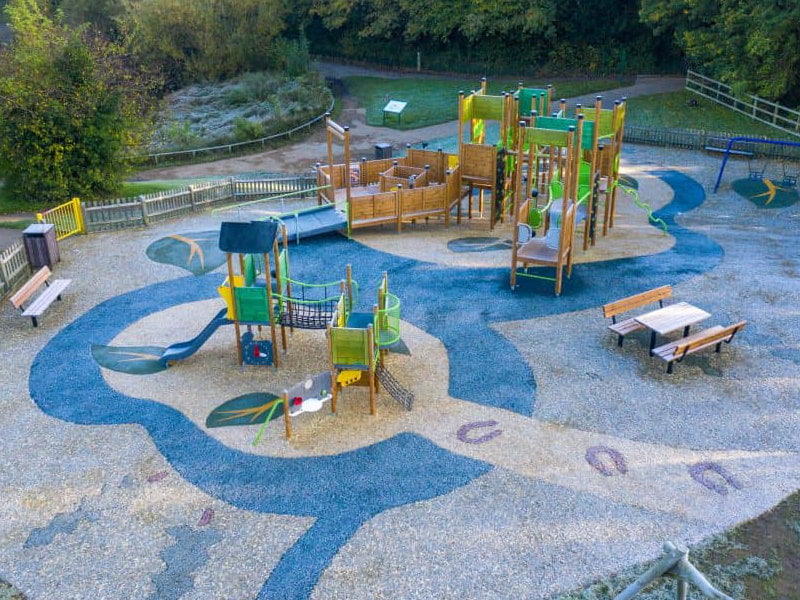
Wet Pour vs Rubber Mulch: Which Playground Surface Is Best?
Both are recycled-rubber safety surfaces tested to BS EN 1177, but they look and behave differently. Here's how to choose between them.
Read article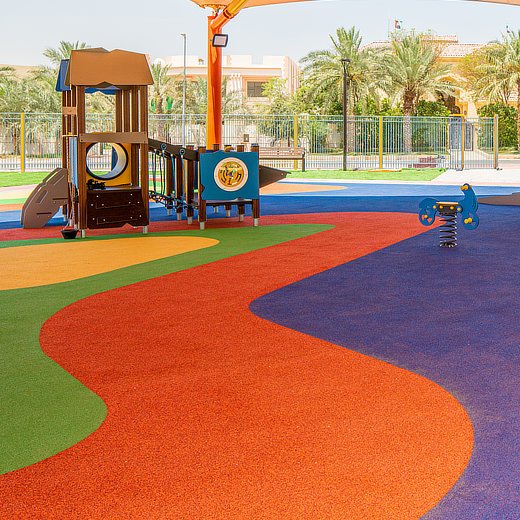
Playground Safety Surfacing Explained: How to Choose
Choosing safe playground surfacing means matching it to equipment fall height under BS EN 1177. Compare wet pour, rubber mulch, grass mats and bark.
Read article
Playground Risk Assessment Checklist for Schools
A plain-English checklist your staff can use to spot playground hazards early, and where a professional RPII inspection takes over.
Read article