Playground Safety Surfacing Explained: How to Choose
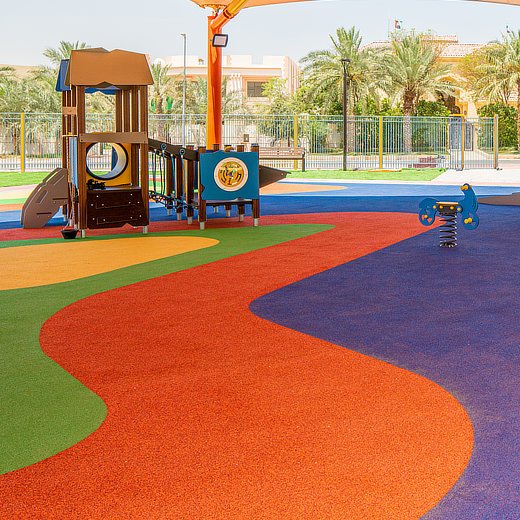
The safest playground surfacing is the one correctly matched to the Critical Fall Height of the equipment above it and tested to BS EN 1177; no single material is safest in every situation. Impact-absorbing surfacing exists to reduce the risk of serious head injury from a fall, so the right choice depends first on how high a child could fall, and then on drainage, maintenance, budget and how the space is used. Getting this match right is the single most important safety decision in any playground.
What is Critical Fall Height and BS EN 1177?
Critical Fall Height (CFH) is the maximum height from which a child could fall onto a surface without an unacceptable risk of serious head injury, and it is the number that drives your surfacing choice. Every piece of play equipment has a Free Height of Fall (the highest point a child can stand, sit or climb to), defined by the equipment standard BS EN 1176. The surface beneath it must have a Critical Fall Height equal to or greater than that Free Height of Fall. BS EN 1177 is the British and European standard that sets out how impact-absorbing surfaces are tested and rated for their Critical Fall Height. In practice this means the surfacing must always match the equipment: a tall climbing frame needs a surface tested to a higher CFH than a low toddler unit.
Why must surfacing match the equipment's fall height?
Surfacing must match the equipment's fall height because a surface rated below the equipment's Free Height of Fall offers too little protection in a fall, while a correctly rated surface absorbs the impact. A rubber surface installed at one thickness might be certified to 1.5 metres, and a greater thickness to 2.5 metres or more, so the same material can be right for one item and inadequate for another. This is why surfacing and equipment should always be specified together, and why swapping in taller equipment later can mean the existing surface no longer complies. A professional design confirms the fall height of every item and specifies a surface certified to meet or exceed it.
How do the main surfacing types compare?
Each impact-absorbing surface has its own strengths on cost, drainage, maintenance and fall-height range. The main options are set out below.
Wet pour rubber
Wet pour is a continuous, two-layer rubber surface poured on site, valued for its smooth, wheelchair-friendly finish and design flexibility. It drains freely, needs little day-to-day maintenance and can be laid in colours and graphics. Its Critical Fall Height is set by the thickness of the base layer, so it suits everything from low-level areas to tall equipment. The main considerations are a higher upfront cost and the need for a well-prepared base.
Rubber mulch
Rubber mulch is bonded recycled rubber that gives a natural, bark-like appearance while performing as a permeable safety surface. It drains well, resists displacement and can achieve high fall-height ratings depending on depth. It works well over undulating ground and around trees, and is generally hard-wearing.
Grass mats and reinforced grass
Grass mats are rubber tiles laid over existing grass; the grass grows through so the surface stays green while the mats provide impact protection and reduce wear and mud. They are a cost-effective choice for lower fall heights, such as under swings and smaller units, and they preserve a natural look. They rely on reasonable ground conditions and are best where the underlying grass can establish.
Artificial grass
Artificial grass with a shock-absorbing underlay combines a natural appearance with all-year usability and consistent impact protection. It stays usable in wet weather, needs no mowing and suits multi-use areas. The fall-height rating depends on the underlay specified, so it must be matched to the equipment. It is also popular for sports facilities where a hard-wearing, low-maintenance finish is wanted.
Loose-fill bark
Loose-fill bark (play-grade woodchip) is a traditional, natural and lower-cost surface that provides good impact absorption at the correct depth. Its Critical Fall Height depends on maintaining a minimum installed depth, typically around 300mm, because bark compacts and displaces with use. It therefore needs regular topping up and raking, and good drainage beneath to stop it becoming waterlogged. It is a warm, natural option provided it is inspected and maintained.
How do you choose the right surfacing?
Choose surfacing by starting with the equipment's fall height, then weighing drainage, maintenance, accessibility, appearance and budget. Work through these steps:
- Confirm the Free Height of Fall of every item, then require a surface certified to that Critical Fall Height or higher under BS EN 1177.
- Consider access: bonded surfaces such as wet pour and artificial grass suit wheelchairs and buggies; loose fill does not.
- Factor in maintenance: loose-fill bark needs the most ongoing attention; bonded surfaces need the least.
- Check drainage and the existing ground, as these affect both cost and longevity.
- Plan for inspection and upkeep so the surface keeps performing over its life.
Choosing and installing safe surfacing is easier with expert help. Our team can survey your site, confirm the fall heights of your equipment and recommend a compliant surface within your budget as part of a free, no-obligation design and quote, and we also handle ongoing repairs and maintenance to keep it safe. Browse our playground surfacing options or contact us to arrange a visit.
Related questions
What is the safest playground surface?
There is no single safest surface. The safest surface for your playground is one whose Critical Fall Height, tested to BS EN 1177, meets or exceeds the fall height of the equipment above it. The best material then depends on drainage, maintenance, access and budget.
How thick does playground surfacing need to be?
It depends on the material and the required Critical Fall Height. Rubber surfaces achieve higher fall heights with greater thickness, while loose-fill bark typically needs around a 300mm installed depth. The thickness must be specified to match the equipment's fall height.
Does grass count as a safe playground surface?
Ordinary grass offers limited impact protection and only for very low falls. Reinforced grass mats or artificial grass with a shock-absorbing underlay provide a certified Critical Fall Height while keeping a natural look, making them a safer choice under equipment.
How often should playground surfacing be inspected?
Surfacing should be checked as part of routine visual and operational inspections, with a formal annual inspection recommended. Loose-fill surfaces such as bark need frequent checks to maintain depth, while bonded surfaces should be inspected for wear, damage and trip hazards.
More from the blog
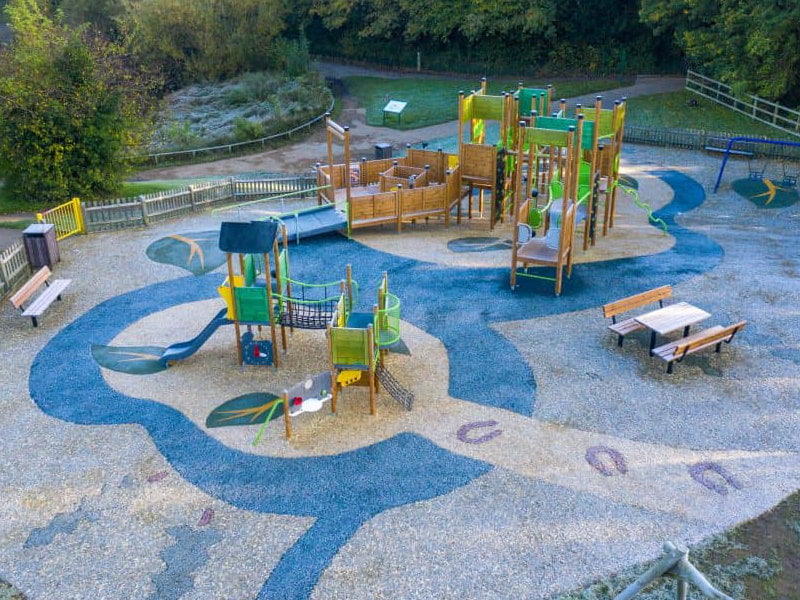
Wet Pour vs Rubber Mulch: Which Playground Surface Is Best?
Both are recycled-rubber safety surfaces tested to BS EN 1177, but they look and behave differently. Here's how to choose between them.
Read article
Playground Risk Assessment Checklist for Schools
A plain-English checklist your staff can use to spot playground hazards early, and where a professional RPII inspection takes over.
Read article
Nursery Playground Hazards: 7 Risks and How to Fix Them
The seven most common nursery playground hazards, from unsafe surfacing to gate safety, with the practical fix for each and the standards that apply.
Read article